
'The Modi regime, after experimenting with its own versions of neighbourhood policy for 18 months, has now reached the exact stage where the Manmohan Singh government had left it in so far as our Pakistan policy is concerned,' says former senior RA&W officer Vappala Balachandran.

Greek proposals hailed as "a positive step forward".

'Did Trump hint at US military intervention in Qatar?' asks Ambassador M K Bhadrakumar.

'The Pakistani JIT's visit is the first ever experiment by the two South Asian neighbours to probe a terror attack 'jointly.' Well, it is not unlike the scenario wherein the thief himself is made an investigator,' says Rajeev Sharma.

Dispelling the notion that India-China are rivals, Bambawale also said there is no "anti-China mentality" in India.

China sees India and Japan's 'North East Road Network Connectivity Improvement Project' as a challenge to its OBOR, says Rajaram Panda.

The new government needs to clearly insist on diplomatic reciprocal arrangements with China. While reciprocity is a function of power in bilateral relations, the Modi-led government's responses should be based on India'S inherent strengths, says China expert Srikanth Kondapalli.
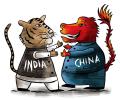
'China's vulnerability on the global stage has given an opening to India to push for its own interests,' notes Harsh V Pant.
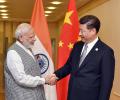
Chinese chief negotiator Ambassador Wang Qun told ANI on Friday, "NSG will not take up India's case as of now. There are differences on admitting non-Nuclear Non-Proliferation Treaty members. Signing the NPT first is one of five criteria (for membership). These have not been set by China, but by group as a whole."

India on Monday did some plain-speaking with China over its blocking of the Indian bid to get JeM chief Masood Azhar banned by the UN and warned the global community of "serious consequences" if it continues to adopt "double standards" in dealing with terrorism.

"We have many relationships...they have a history. We will do what is in our national interest and part of that strategic partnership is the ability of each country to comprehend and appreciate the national interest of the other," Jaishankar said.
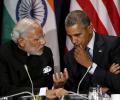
'Big countries do not agree on every set of issues.' 'Look, one of the differences in the relationship is that when we do not agree, we are sitting down and talking to each other.'
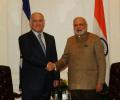
Modi's visit is aimed at commemorating 25 years of establishment of diplomatic ties between the two countries.

'Previous governments in India had reservations about working with Israel.' 'Modi has shed this tag.' 'Disengaging itself from its traditional and ideological foreign policy approach in the Middle East shall serve India's long-term interests.' Rajaram Panda explains why the significance of Modi's visit to the Jewish nation goes beyond markers like the first-ever visit to Israel by an Indian PM and 25 years of diplomatic ties.
The American, Russian and Chinese reactions to the Uri attack indicates how tough it will be for India to 'isolate' Pakistan internationally,' says Ambassador M K Bhadrakumar.

India and China on Wednesday signed in all nine agreements, including the Border Defence Cooperation Agreement and one on strengthening cooperation on trans-border rivers, after restricted and delegation-level talks that lasted over two hours as Prime Minister Manmohan Singh and Premier Li Keqiang met for the second time this year for talks which the Indian leader described as "fruitful and productive".

Here's the full text of President Ram Nath Kovind's customary address to the joining sitting of Parliament on the first day of the budget session.

Is North Korea really dismantling its nuclear programme? Rajaram Panda explains the many challenges to denuclearise the Korean Peninsula.

The 41st US president held his post from 1989 and 1993.

Any additional effort to assuage the growing worldwide hunger for infrastructure funding is more than welcome, says Barun Roy.

Terming his just-concluded state visit to Bhutan as very successful and his "most memorable", President Pranab Mukherjee hoped that bilateral relations between the two countries would continue to grow from strength to strength.

Days before Narendra Modi arrives in the US to speak at the UN, meet Barack Obama, gupshup with the likes of Nadella, Pichai, Zuckerberg, and address desis in Silicon Valley, his ministers will help set the commercial and strategic tone for the prime minister's visit.

In diplomacy, a prime ministerial visit should be viewed as a rare event, not a routine one, which should be taken recourse to only when other options like ministerial visits are not available. But Modi has a different style of functioning. He wants to do everything himself, says Rajeev Sharma

India is no longer shying away from playing a role on the regional and international stages and is willing to don a bigger role in regional politics. It is showing traits of a responsible stakeholder in the regional security dynamics, says Dr Rahul Mishra.

'We should not have waited for the political crisis in Nepal to erupt before being galvanised into action,' says Shyam Saran. 'We should have seen what was coming and not accepted assurances from the leaders of the political parties at their face value.'

The new equation between 'Namo' and 'Barack' may well 'convert a good start into lasting progress.'
'The attack on the Pathankot base constituted an act of war. Yet Modi's only public comment up until now on that attack has been to blame it on "enemies of humanity".' 'Modi came to power talking tough about Pakistan. But in office, he has pursued a Pakistan policy that has lost both direction and purpose,' argues Brahma Chellaney.

Here's the full text of Prime Minister Narendra Modi's address to the United States Congress.

Russia and the US began second round of negotiations on securing Syria's chemical arsenal, hoping the high-stakes talks would lead to broader peace efforts, even as Damascus submitted application to UN for joining the chemical weapons convention.

'India must close the missile technology gap with both China and Pakistan as early as possible, or else the credibility of India's nuclear deterrence will remain suspect,' says Brigadier Gurmeet Kanwal (retd).

'It is very significant that the president and the prime minister discussed Pakistan's efforts to take action against Lashkar-e-Tayiba and its affiliates.' 'This is something new and it demonstrates a recognition of Pakistan of the threats these terrorist groups pose to Pakistan and pose to other countries.'
Turkish President Recep Tayyip Erdogan's has been trying to mollycoddle India with sweet nothings while having a very close relationship with Pakistan.

'It seems that the BJP in its desire to catapult Modi onto the international stage, knowing the image deficit due to visa denials, has caused unhappiness in Tamil Nadu, uncertainty in Bangladesh and a churning in Pakistan that Sharif may or may not be able to control,' says Ambassador K C Singh.

With Beijing having had a profound rethink on India's admission as a full member of the Shanghai Cooperation Organisation, the tectonic plates of the geopolitics of a massive swathe of the planet stretching from the Asia-Pacific to West Asia are dramatically shifting. That grating noise in the Central Asian steppes will be heard far and wide -- as far as North America, says Ambassador M K Bhadrakumar.

'The surge of Saudi nationalism is the last thing Washington wants,' says Ambassador M K Bhadrakumar.

'Modi's promise of change during the election campaign was on the domestic front, but his first year in office focused on foreign policy beyond all expectations,' says Ambassador T P Sreenivasan.

Hollande will be arriving in Chandigarh on January 24 where he is expected to be received by Prime Minister Narendra Modi.

Modi knew in his heart that India does not have the financial muscle to support the new bank with offers of co-financing international projects, something China can do from the bank's base in Shanghai. If established in Mumbai, it may have employed a few Indian bankers and satisfied the national ego but there was little financial value to be drawn from it.
In a blunt attack on Pakistan, Prime Minister Narendra Modi on Sunday accused it of creating "nuisance" and "constantly" troubling India by promoting terrorism.
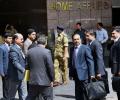
If Pakistan allows India to send its investigation team to question Azhar it would take the India-Pakistan camaraderie to a new level, says Rajeev Sharma.
 © 2026 Rediff.com - Advertise with us - Disclaimer - Privacy Policy - Sitemap - Feedback - About us - Terms of use - Grievances